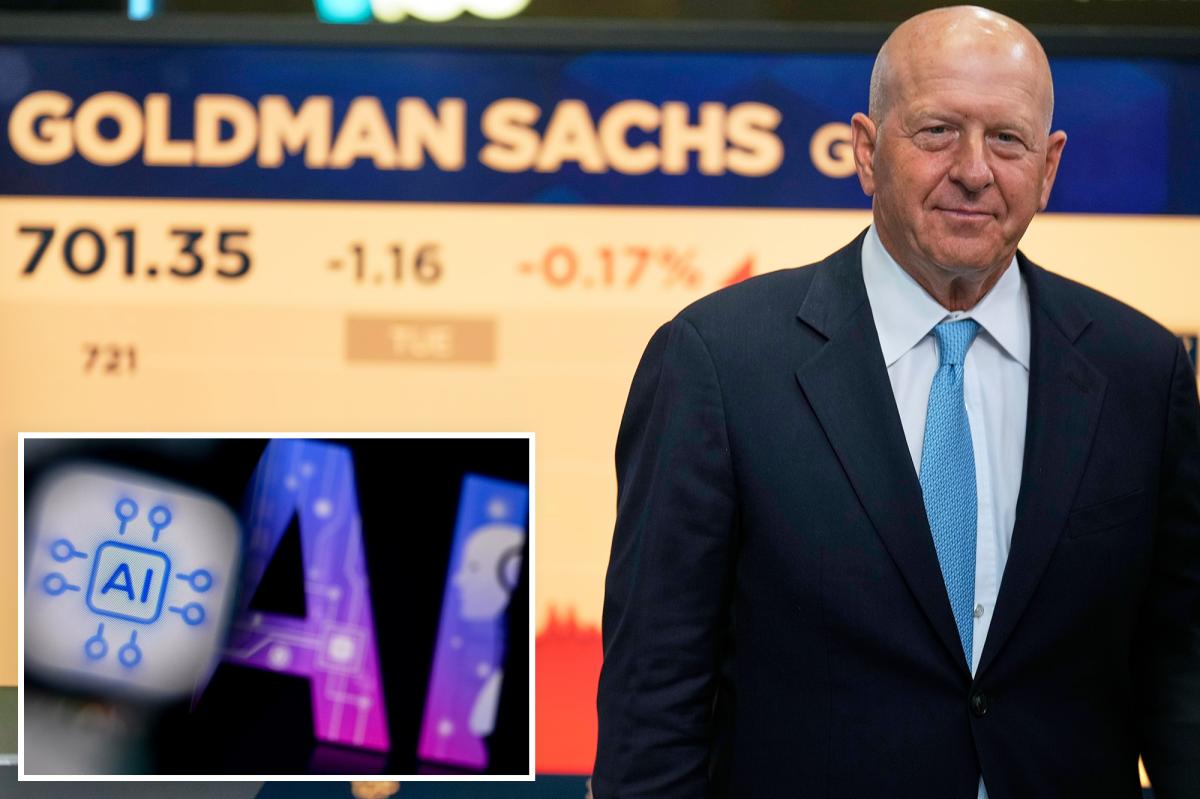
AI Investment Frenzy: Solomon Compares to Dot-Com Bubble
The current global economic landscape is undeniably dominated by the surging interest in artificial intelligence. From groundbreaking advancements in machine learning to the proliferation of AI-powered applications, the technology promises to reshape industries and daily life. This excitement has translated into an investment frenzy, propelling major US stock indexes to unprecedented highs. However, amidst this optimism, a voice of caution has emerged from the upper echelons of finance: David Solomon, the astute CEO of Goldman Sachs.
While the name David Solomon might resonate in some artistic circles, bringing to mind the late American painter celebrated for his lyrical abstraction and exploration of metaphysical themes (
Exploring David Solomon's Abstract Art Legacy), our focus today is squarely on the financial luminary. During Italian Tech Week in Turin, David Solomon voiced a significant warning that has echoed across the markets, comparing the current AI investment fervour to the infamous dot-com bubble of the late 1990s and early 2000s. He anticipates a potential "drawdown" in equity markets within the next 12 to 24 months, urging investors to proceed with prudence. Solomon's insights, particularly concerning the stability of the david solomon markt, offer a crucial reality check in an otherwise euphoric environment.
Echoes of the Dot-Com Era: Solomon's Historical Perspective
David Solomon's warning is rooted in historical precedent, drawing a stark parallel between today's AI enthusiasm and the internet craze that captivated investors at the turn of the millennium. The dot-com bubble saw an unprecedented rush of capital into tech companies, many of which had unproven business models or lacked profitability. Speculative valuations skyrocketed, driven by hype and the promise of a digital future. However, this period was ultimately followed by a dramatic collapse in the shares of countless firms, resulting in significant losses for many who had bought into the frenzy.
Solomon asserts that a "similar phenomenon" is likely to unfold in the AI space. His concern isn't about the fundamental potential of artificial intelligence itself, which is undeniably transformative. Instead, it’s about the *manner* in which capital is being deployed and the associated investor sentiment. When excitement peaks, investors tend to focus predominantly on the upside, often overlooking inherent risks and overextending themselves on the "risk curve." This collective optimism can inflate asset prices beyond their intrinsic value, creating an unsustainable bubble. The david solomon markt observation here highlights the cyclical nature of investor psychology, where innovation often precedes a period of speculative overreach before settling into sustainable growth.
The current landscape sees significant governmental and private sector investment propelling AI development, such as the Trump administration's plan to funnel $500 billion into new AI infrastructure over the next four years in collaboration with tech giants like SoftBank, OpenAI, and Oracle. While such initiatives underscore the strategic importance of AI, they also fuel the intense optimism that, according to Solomon, could be leading many down a path where "a lot of capital that’s deployed will turn out to not deliver returns." This imbalance between deployed capital and actual returns is the core mechanism that leads to market corrections.
Navigating the AI Investment Landscape: Risks and Returns
The Goldman Sachs CEO's prediction of an equity market "drawdown" within the next two years is not a call for panic, but rather a strategic alert for investors to re-evaluate their positions and expectations. He specifically highlighted that many current AI investments might not yield the anticipated big returns. This isn't to say that AI won't create immense wealth; rather, it suggests that not every company riding the AI wave will be a winner. Identifying which companies will truly leverage AI for sustainable growth, as opposed to those merely benefiting from speculative trading, is the critical challenge.
One of the primary risks is the overvaluation of companies based on future potential rather than current fundamentals. Many AI companies are still in nascent stages, with their profitability contingent on future market adoption, technological breakthroughs, and competitive landscapes. Investors, captivated by the promise of AI, might overlook traditional valuation metrics, leading to inflated stock prices that are vulnerable to sharp corrections once reality sets in.
Practical Tip for Investors: When considering AI investments, conduct thorough due diligence beyond just market hype. Look for companies with clear business models, strong management teams, existing revenue streams (or a clear path to them), and a distinct competitive advantage. Diversification is key; rather than putting all your eggs in one high-growth, speculative basket, consider a balanced portfolio that includes established tech giants with robust AI initiatives alongside carefully vetted emerging players. This approach can help mitigate the risks associated with a potential david solomon markt drawdown. For more in-depth analysis on this topic, refer to
Goldman Sachs CEO Warns of AI Stock Market Drawdown.
The Investor's Playbook: Strategies for Prudent AI Engagement
Given David Solomon's cautionary outlook, how should investors approach the AI market? A prudent strategy involves a combination of informed research, realistic expectations, and risk management.
1.
Focus on Fundamentals, Not Just Futurology: While AI's future is exciting, base your investment decisions on a company's current financial health, its ability to generate profits, and its competitive moat. How is AI integrated into their core products or services? Does it genuinely enhance their value proposition, or is it merely a buzzword?
2.
Differentiate Between Enablers and Speculative Plays: Consider investing in companies that provide the foundational infrastructure for AI (e.g., chip manufacturers, cloud computing services, data providers) versus those whose AI applications are still highly speculative. Enablers often have more predictable revenue streams and broader market exposure.
3.
Embrace ETFs and Index Funds for Broad Exposure: For investors who want to participate in the AI boom without picking individual winners and losers, AI-focused exchange-traded funds (ETFs) or broader tech index funds can offer diversified exposure to the sector while spreading risk. This can be a safer entry point than betting heavily on a single startup.
4.
Understand Valuation Metrics: Learn to interpret metrics like Price-to-Earnings (P/E) ratios, Price-to-Sales (P/S) ratios, and enterprise value. Compare these figures to industry averages and historical data to assess if a company's stock price reflects its underlying value or speculative froth. Extremely high valuations often signal that a significant portion of future growth is already "priced in."
5.
Long-Term Vision vs. Short-Term Gains: While the allure of quick profits in a surging market is strong, adopting a long-term investment horizon can buffer against short-term volatility and drawdowns. True innovation takes time to translate into sustainable financial returns. The david solomon markt perspective here emphasizes patience and strategic allocation over chasing transient trends.
Beyond the Hype: A Balanced Outlook on AI's Future
David Solomon's insights serve as a timely reminder that even the most revolutionary technologies are subject to market cycles and human psychology. AI is undoubtedly a game-changer, poised to drive unprecedented productivity gains and innovation across numerous sectors. However, the path to realizing its full economic potential will likely be bumpy, characterized by periods of intense enthusiasm followed by corrections as the market recalibrates expectations.
Solomon's comparison to the dot-com bubble is not a prophesy of doom for AI but a cautionary tale about investor behavior. It underscores the importance of a disciplined, research-driven approach rather than succumbing to the collective excitement that often leads to irrational decision-making. As the AI revolution continues to unfold, discerning investors who prioritize fundamentals, manage risk, and maintain a long-term perspective will be best positioned to navigate the complexities of the david solomon markt and capitalize on AI's enduring potential. The future of AI is bright, but a wise investor will approach it with a clear head, recognizing that not every AI-related venture will deliver stellar returns, and that market corrections are an inevitable part of the innovation cycle.